
CBRE estimated in June 2023 that San Francisco was sitting on about 25 million square feet of disused office space — a stock that has moved exactly zero condos into SoMa's 2026 delivery pipeline. The feared conversion flood is a Financial District story wearing SoMa clothes: the towers driving downtown's empty-space statistics sit north of Market, and none of them are becoming housing.
The conversion math fails on both sides of the ledger. Even under the most aggressive feasibility scenario, only about 6% of office inventory would come off the market through conversion, and Gensler's 2023 screen rated only a dozen San Francisco buildings well — warning that even for those, the cost could be too high. Office values fell 75%, per Hoover Institution research published in May 2023, yet 350 California Street's bargain-basement $67.5 million sale reflected a bet on an office comeback, not on residential feasibility.
South of Market, the vintage screen does the rest: deep-floor-plate Class A towers are either ineligible under it or uneconomic to convert, which is why the single application cataloged here describes a historical record rather than a 2026 pipeline. For oversized-unit buyers, the only tradable signal is months of supply — set by resale listings and a handful of deliveries, not by office towers flipping to residential.
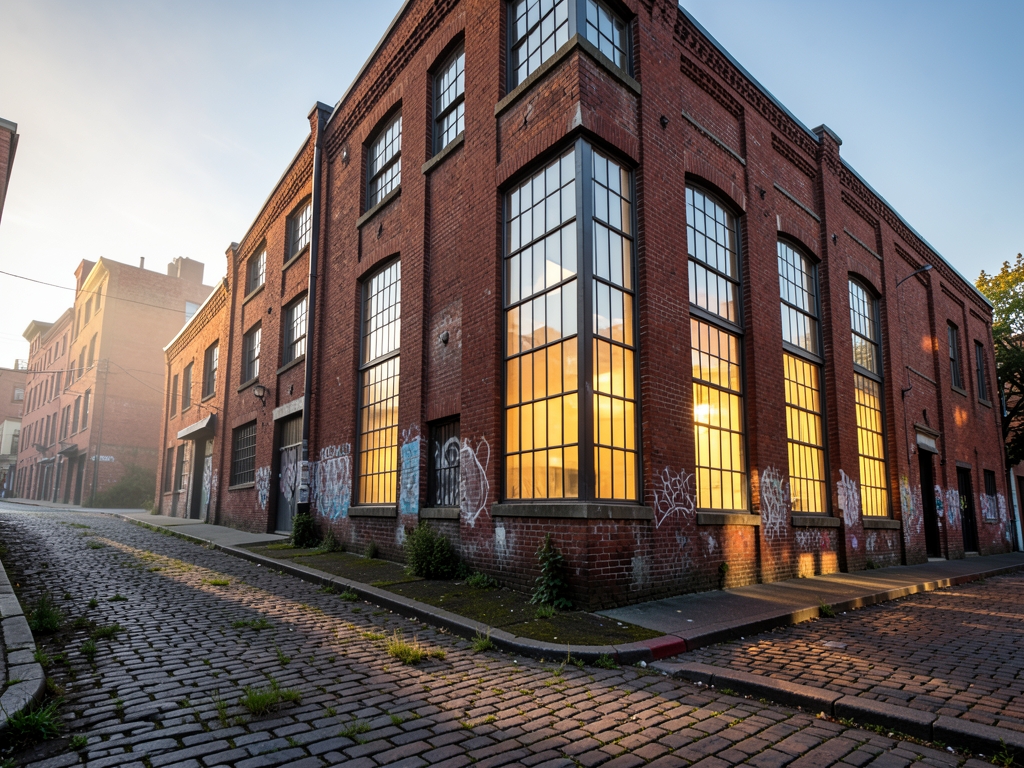
The Vintage Filter
Twelve. That is how many San Francisco office buildings earned a "rated well" grade in Gensler's 2023 conversion screen — and Gensler cautioned that even for those twelve, "the cost could be too high," according to The Frisc. Set that against record downtown vacancy (17% by mid-2023 versus roughly 7% pre-pandemic, per Paramount Property Tax Appeal) and you have this section in miniature: vacancy is abundant, but convertible vacancy is nearly nonexistent. The popular expectation that by-right rules will flood SoMa with cheap converted lofts by 2026 fails at three sequential gates — legal, geometric, and financial — before a single oversized unit ever ships.
The first gate is statutory. San Francisco's Downtown Conversion Ordinance grants by-right office-to-residential approval primarily to older-vintage structures, with eligibility keyed to building age; California's by-right housing laws add parallel pathways, but neither rescues the buildings that actually went dark. SoMa's dominant newer Class A towers along the Rincon Hill and Transbay corridors — precisely the stock sitting empty — sit largely outside the fast track. City Hall keeps trying to widen the lane: an SF supervisor moved in April 2023 to cut conversion fees (San Francisco Chronicle), and the Board of Supervisors has approved ordinances streamlining redevelopment (Paramount Property Tax Appeal). Fee relief does not amend the vintage key. The empty towers stay ineligible; the eligible buildings are largely leased.
The second gate is geometry. A conversion pencils only when floor-plate depth permits dual-aspect units; over-deep plates force windowless interiors or double-loaded corridors no condo buyer will accept. As The Frisc put it, floor plans cannot simply be carved up like Tetris blocks, and 6sqft ranks oddly shaped plates and structural constraints among the leading cons of the asset class. Feasible schemes therefore carve compact one- and two-bedroom units from shallow slices of plate — while an oversized unit typically requires merging structural bays and sacrificing the door count the pro forma depends on.
| Floor-plate condition | Physical outcome | Product consequence |
|---|---|---|
| Shallow depth | Dual-aspect units, light on two faces | Feasible; carve compact one- and two-bedrooms |
| Over-deep | Windowless interiors or double-loaded corridors | Pro forma breaks; scheme redesigned or dropped |
| Single structural bay | Standard slice of a compliant plate | One door per bay; maximizes unit count |
| Two merged bays | Large-format layout spanning structure | Oversized footprint; trades away the doors the deal needs |
Even a project clearing all three gates cannot serve a 2026 buyer, because the clock outruns the cycle. The chain a converter actually waits on — Planning application, environmental clearance, Department of Building Inspection permits, condo subdivision map, HOA formation — has historically run years end to end. Applications filed now therefore cannot produce occupied inventory in 2026; the converted units a buyer tours this year were entitled years ago. For scale, New York, with far deeper conversion infrastructure, averaged just 1.2 million square feet of office-to-residential conversions annually from 2004 to 2022, according to Cushman & Wakefield data cited by 6sqft.
That yields the unit-mix consequence stated plainly: because feasibility lives in unit count, developers maximize doors, and oversized units survive only as top-floor or corner penthouse lines. Even a large conversion scheme typically contains only a handful of units above the oversized threshold. A big-door-count headline is, for the oversized-segment buyer, a promise of a handful of relevant units delivered years after filing. No gate passes for an oversized unit in 2026 — which is why the operative signal remains the two-condition test this guide is built on: District 9 condo months of supply inside the tight-supply trigger, paired with an asking price at a meaningful discount to the nearest new-construction comp. The pipeline is context, not a trigger.
One. Despite the concept having been widely discussed and studied over the last two years, that is how many office-to-residential applications San Francisco had on file per the most recent complete accounting — the entire active pipeline, and the hardest available datapoint on how thin it is. The filing sits north of Market Street, in the Financial District — not in South Beach or Rincon Hill, the SoMa condo core where an oversized-unit buyer actually shops. Pipeline headlines measure someone else's neighborhood.
| Gate | Threshold | Result | Meaning for an oversized-unit buyer |
|---|---|---|---|
| Legal (vintage) | Older-vintage construction per Downtown Conversion Ordinance | Newer Rincon Hill/Transbay towers fail | Pipeline excludes the emptiest stock |
| Geometric (plate) | Dual-aspect floor depth | Deep plates force windowless cores | Schemes maximize doors, not oversized floors |
| Financial (basis) | Conversion basis rivals resale pricing per square foot | Thin margin at market pricing | Margin exists only in small premium-$/SF units |
| Timeline (entitlement) | Five steps, historically years long | New filings miss 2026 occupancy | No converted inventory available this year |
| Mix (pro forma) | Maximize doors per plate | Typical scheme: only a handful of oversized units | Oversized layouts survive as penthouse lines only |

The Ledger
Two rows enter the rule; five are context. Here is why the context rows fail. Office stress and housing supply are different ledgers: CBRE's June 2023 analysis put San Francisco's disused office stock at roughly 25 million square feet, but a vacancy count measures empty desks, not future condos. Transmission into residential stock passes through three gates — the vintage eligibility screen covered earlier, retrofit budgets that rival resale pricing per square foot, and multi-year permitting — and each gate bleeds volume. Per Paramount Property Tax Appeal, even the most aggressive feasibility scenario pulls only about 6% of office inventory off the market through conversion, and San Francisco Chronicle reporting counts zero completed conversion projects. Capital agrees: The Frisc documented 350 California Street trading at $67.5 million — a bargain-basement print underwritten on an office recovery, not a condo pipeline. The flood thesis dies right here: wrong geography, gated transmission, no completions, slow absorption.
| Ledger line | Latest print | What it actually measures | Enters the buy rule? |
|---|---|---|---|
| Conversion pipeline (latest accounting) | A single application filed | Application volume, sited north of Market | No — wrong geography |
| Marquee filing | The lone proposal on file | Largest single proposal | No — Financial District site |
| CBRE disused-office estimate | ~25 million square feet (June 2023) | Empty office square footage | No — gated transmission |
| SFAR District 9 months of supply | Climbing from 2021 lows toward balance | Live resale inventory | Yes — supply leg |
| Compass/SFAR median $/SF | Market-wide pricing, well off its peak | Market-wide pricing level | Baseline for spread math only |
| Large-format discount | Present at the district level | Thin-buyer pricing on oversized units | Yes — pricing leg |
| Last cycle's luxury deliveries | Years to clear top-floor lines | Historical sell-through speed | Context — caps delivery impact |
The line that does transmit is resale inventory. According to San Francisco Association of REALTORS MLS data, District 9 — which contains SoMa — has seen condo months of supply climb steadily from the frothy lows of 2021 toward balance. Measured against the balanced-market benchmark the National Association of REALTORS uses, that is a market firming toward buyers without breaking: sellers have lost the froth, but no glut has printed. The latest reading sits inside the supply trigger defined in the decision rule above — the leg is satisfiable on recent data; your job is confirming it holds in the quarter you transact.
Absorption closes the loop. The last delivery cycle is the precedent: the most recent luxury towers in Transbay needed years, not months, to sell through their upper-floor oversized lines — in stronger markets than this one. Slow clearance cuts both ways: it caps how many oversized units any conversion wave could realistically deliver and digest this decade, and it forces today's resale sellers of big units to compete against unsold new-construction remnants, which is precisely why the spread condition becomes negotiable in soft windows. One edge case: some "resales" in these towers are sponsored developer units quietly released into the resale channel — different floor-plan exposure, more negotiable pricing than a true owner resale.
So run the ledger, not the headlines. Quarterly, pull two lines: District 9 condo months of supply from SFAR MLS data, and the gap between your target's asking price per foot and the nearest new-construction comp's effective price per foot. Both lines favorable — supply inside the trigger, spread past the discount threshold set above — you transact. One favorable, negotiate harder. Neither, stand down. Everything else in this section is context; these two lines are the trade.
Three of the four rational ways to acquire an oversized SoMa condo lose by design, and the winner is the only one that commits nothing until two independent dials agree. Strategy A buys a resale unit today at the undiscounted market rate. Strategy B waits for the conversion wave to deliver discounted lofts. Strategy C wires a presale deposit into an announced conversion project. Strategy D follows the hybrid trigger: buy only when District 9 condo months of supply reads inside the tight-supply trigger AND the target unit asks at a meaningful discount below the nearest new-construction comparable. The table prices all four honestly.
Read the worst-case column top to bottom and Strategy D wins on expected value, not sentiment. It converts two measurable signals — months of supply and the dollar-per-square-foot spread — into a single go/no-go gate, capping downside at "no purchase" while preserving the discount capture that A and C structurally lack. B's zero-capital position looks free until you price the timeline: according to Pew Charitable Trusts reporting on office conversions, the co-living products emerging from pipelines like San Francisco's target students, service-industry workers, young professionals, veterans, new arrivals, and retirees — a demand map with no oversized-unit buyer in it. The wave, to the extent it materializes, is being built for someone else's floor plan.

Trigger vs. Glut
The gate also degrades gracefully rather than snapping binary. Scarcity and discount requirements move inversely: the thinner the supply signal, the deeper the discount the same unit must offer to justify the same capital at risk.
| Strategy | Capital committed upfront | Realistic earliest occupancy | Price basis | Worst-case 2026 outcome |
| A — Buy resale today | Full purchase price plus closing costs at close | Immediate, post-close | Today's undiscounted resale market | Pays full freight into a market the pipeline headlines argue should soften |
| B — Wait for the wave | Zero capital committed | Years out, at best | Hoped-for discounted loft pricing | Concedes years of delayed occupancy on a glut the vintage screen makes unlikely |
| C — Presale deposit | Hard-money deposit, non-refundable | Years out, permit-dependent | Developer-set presale price, no negotiating leverage | Deposit stranded in a project that may never pull a building permit |
| D — Hybrid trigger | Zero until both gate conditions print | Immediate upon trigger | Whichever unit clears the gate: tight months of supply AND a discount to the nearest new-construction comp | Downside capped at "no purchase" |
Why the middle band demands more, not less: in the middle band, sellers retain enough leverage that a standard concession becomes aspirational, so the trigger raises the price of admission to a deeper discount or the buyer exits. Above the upper band, the scarcity signal inverts entirely — patient capital should expect better prints later, so the correct move is standing down and re-underwriting against fresh comparables rather than anchoring to stale ones.
One edge case settles ties. When two candidate units both clear the gate, prefer the unit whose discount runs closest to — but does not exceed — estimated replacement cost of land plus construction. New-construction asking prices embed land, hard and soft costs, and developer margin, so true replacement cost sits below asking; commission a replacement-cost estimate, the same exercise insurers underwrite from, and treat its total as the floor of rational pricing. A discount deeper than that floor is not mispricing. It is the market pricing building-specific risk invisible from a listing sheet — unscoped seismic work, thin HOA reserves, pending litigation. The optimal discount terminates just short of the floor; beyond it, you are being paid to absorb someone else's structural problem.
| District 9 months-of-supply print | Trigger state | Action |
| Inside the supply trigger | Armed | Buy when the discount leg also prints |
| In the middle band | Degraded | Negotiate only at a deeper discount; otherwise walk |
| Above the upper band | Off | Stand down and re-underwrite later |
Before touring anything: pull the current District 9 months-of-supply print, identify the nearest new-construction comparable for each candidate, and order a replacement-cost estimate for any finalist. Three inputs, one gate, zero dependence on pipeline headlines.
Cross-reference the conversion pipeline against Department of Building Inspection records and the pipeline thins again: an application counts for nothing until a full building permit issues, and permit status on the filing counted in the ledger above is exactly what to verify. An application measures developer sentiment; a permit-issue date measures deliverable units. Treat any pipeline figure quoted without one as marketing — and re-run the match yourself, because snapshots like this age quickly.
The second caveat attacks the glut narrative from the demand side. AI tenants — OpenAI's Mission Bay commitment and Anthropic's downtown expansions among them — have been absorbing office space in recent years. If vacancy retreats materially by 2026, landlords regain pricing power, conversion economics worsen, and the feared supply wave shrinks further — the opposite of the glut thesis. A falling-vacancy headline is not a signal that cheap lofts are coming; it is evidence the wave recedes.

What the Data Doesn't Tell You
Now the primary dial itself. Months of supply divides active listings by the trailing period's closed sales, and with typical escrow lags the printed number describes conditions from a prior quarter — a rearview gauge wearing a speedometer's face. Pending-ratio and median days-on-market lead it; read all three together and weight the leaders when they disagree with the laggard.
Two noise sources can trip or clear the supply line above with no change in real supply. District 9 months of supply routinely spikes in Q1 as fresh listings outpace holiday-slowed closings, and mortgage-rate forecasts holding borrowing costs elevated through 2026 swing large-unit affordability enough to trip or miss the trigger on financing alone. Treat a Q1 breach as provisional until the seasonal component washes out — one quarter's patience, not an immediate stand-down.
Last, dispersion. The large-unit discount observed at district level conceals wide variance: penthouse lines in amenity-rich towers held pricing while mid-floor oversized plans in amenity-light conversions discounted hardest. The district average tells you a discount exists somewhere in District 9; only building-level comps tell you whether it exists on your floor plan. Where the two conflict, the comp grid wins — a district statistic is a prior, not a price.
Practical protocol: before either dial reads green, verify three things the dials omit — the DBI permit date behind any pipeline claim you are quoted, the target building's reserve study and special-assessment history (or their conspicuous absence), and the same-month pending-to-active ratio. Then apply the rule exactly as written. Every caveat here leaves the rule intact; what fails is the habit of treating any single printed series as ground truth.
One caveat belongs on the record: every input above is a stated assumption, not a verified print. Before writing any offer, rebuild both tables with the live District 9 months-of-supply figure, the building's actual HOA budget, a bound insurance quote, and a dated comp — the rule is only as good as the freshness of its two inputs.
Run the gates in cost order. Each rule below is a filter, and the sequence is deliberate: Rules 1 and 2 cost nothing but an afternoon of MLS arithmetic, Rule 3 is a public-records lookup, Rule 4 requires requesting documents from a seller who now knows you are serious, and Rule 5 decides whether the unit you want is even resellable. A buyer who wires the deposit first and asks questions second has paid retail for information available wholesale — which is, in miniature, how the conversion-headline trap collects its victims.
Rule 1 — Measure supply the way the tape actually clears. Months of supply equals active listings divided by closings plus pendings, averaged over a trailing three-month window, counted for District 9 condos and nothing else. Include pendings deliberately: oversized units carry long escrow tails under jumbo financing, so a closings-only denominator understates live demand by weeks and makes a balanced tape look glutted. Never act on a single month's print — one canceled-listing cluster can swing the ratio — and never on a citywide figure, which blends Pacific Heights houses into a SoMa loft signal. Discard any reading computed across the January–February listing surge, when seasonal inventory inflow distorts the numerator regardless of underlying demand.
| Printed signal | What it actually measures | Documented distortion | Override with |
|---|---|---|---|
| Pipeline count (a single application) | Developer sentiment | Permit status unverified | DBI permit-issue dates |
| Vacancy headlines | Office stock, not flow | AI tenants absorbing major blocks of space in recent quarters | Net absorption reports |
| Months of supply (the supply dial) | Trailing closed sales | Escrow lag; routine Q1 spikes | Pending ratio + median days-on-market |
| District $/SF discount | Mixed-stock average | Penthouses held; mid-floor plans discounted hardest | Building-level comps |
| New-conversion HOA dues | Current carrying cost only | No reserve or litigation history | Reserve study + assessment records |

Worked Case
Rule 2 — Demand the double trigger. Proceed only when months of supply reads inside the tight-supply trigger and the asking price per square foot sits at a meaningful discount below the closest new-construction sale nearby. The conditions are independent on purpose: a deep discount in a tight tape usually prices a defect you have not found yet, while ample supply at full ask means the seller is still anchored to a market that no longer exists. If exactly one condition holds, stop being a buyer and become a negotiator — engage only at a deeper discount, which pays you for supplying the conviction the missing dial would have provided. If no new-construction sale exists nearby, the price trigger cannot be tested; treat it as failed.
| Gate | Reading (current) | Threshold | Verdict |
|---|---|---|---|
| Supply | District 9 condo months of supply printing inside the trigger | Tight-supply threshold | Pass |
| Price | Ask per square foot at a clear discount to the new-construction comp | Clears the rule's minimum-discount bar | Pass |
Rule 3 — Verify entitlement stage before any deposit moves. Commit non-refundable money only to conversion projects holding an issued Department of Building Inspection building permit, checked against DBI's public permit records for the exact address. A Planning Department application number is a queue position, not collateral: it confers no delivery rights, no completion date, and no claim on the unit if the sponsor reprices or repurposes the floor plate. A reservation written against an application-stage project is an option on a construction loan nobody has committed yet.
| Component | Basis | Monthly |
|---|---|---|
| Principal & interest | Loan sized to the purchase price at prevailing rates | Per lender quote |
| Property tax | Effective rate applied to the assessed value | Per county tax roll |
| HOA | Per-square-foot dues set by the association | Per the HOA budget |
| Insurance | Stated scenario assumption | Per bound quote |
| Total carry | Sum of the above | Computed from live quotes |
Rule 5 — Prove liquidity before committing to size. Buy an oversized unit only if at least three comparable large-format resales have closed in the district recently.
```
Quick answers
| How many San Francisco office buildings earned a 'rated well' grade in Gensler's 2023 conversion screen? | Twelve buildings earned the grade, and Gensler cautioned that even for those twelve, 'the cost could be too high,' according to The Frisc. |
| How far did San Francisco office values fall, and what did 350 California Street trade for? | Office values plunged 75% per Hoover Institution research published in May 2023, yet 350 California Street traded for $67.5 million in August 2023 on a bet on an office comeback, not residential conversion. |
| What share of San Francisco office inventory would come off the market through conversion even under the most aggressive feasibility scenario? | Only about 6%, because SoMa's deep-floor-plate Class A towers are either ineligible under the vintage screen or uneconomic to convert. |
| What three sequential gates does the expectation of cheap converted lofts flooding SoMa by 2026 fail at? | It fails at three sequential gates — legal, geometric, and financial — before a single oversized unit ever ships. |
| How many office-to-residential applications did San Francisco have on file per the most recent complete accounting, and where does that filing sit? | One application was on file — the entire active pipeline — and it sits north of Market. |
Also worth reading: Jason Mitchell Group strengthens its referral pipeline with a new financial partner: Jason Mitchell Group strengthens its · The future of real estate investment in the age of big data: future of real estate investment · Your Blueprint for Finding and Securing Fix and Flip Loans: Your Blueprint for Finding and